Natural health: Are these gentle sports easy on the joints?
Hi, Noémie here. Yes: swimming, cycling, walking, and some gentle exercises are often kind to the joints, as long as you progress gradually and work within your abilities. Adapted physical activity helps maintain joint mobility and strengthen the muscles that support the joints. In natural health, the idea is not to avoid everything, but to choose an activity that feels comfortable and that you can do regularly.
Do this first
- Choose an activity you can do without sudden movements or repeated jumping.
- Start with short sessions, then gradually increase them based on how you feel.
- Warm up for a few minutes before walking, cycling, or exercising.
- Also include some gentle strengthening exercises to support the muscles around your joints.
- Ask a doctor or physical therapist for advice if a joint is swollen, warm, or very painful.
To get moving again without overdoing it, you can explore these tips on gentle sports to get started again without pain and compare cycling, yoga, or walking.
Why gentle sports can be kind to your joints
Cartilage gets its nutrients from synovial fluid. Movement and the alternation between bearing weight and releasing it encourage circulation around the joint, while nearby muscles help support its stability.
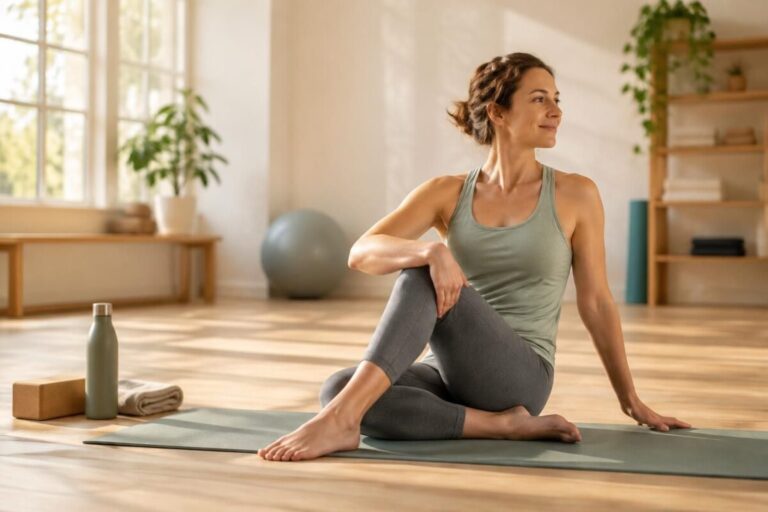
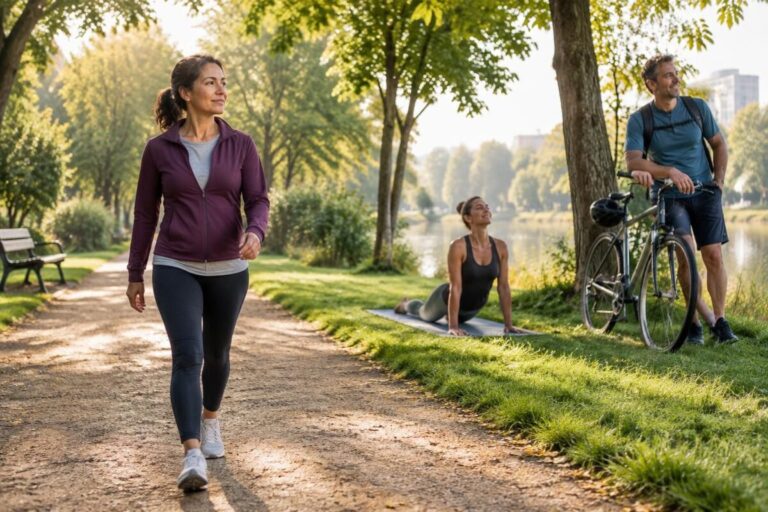
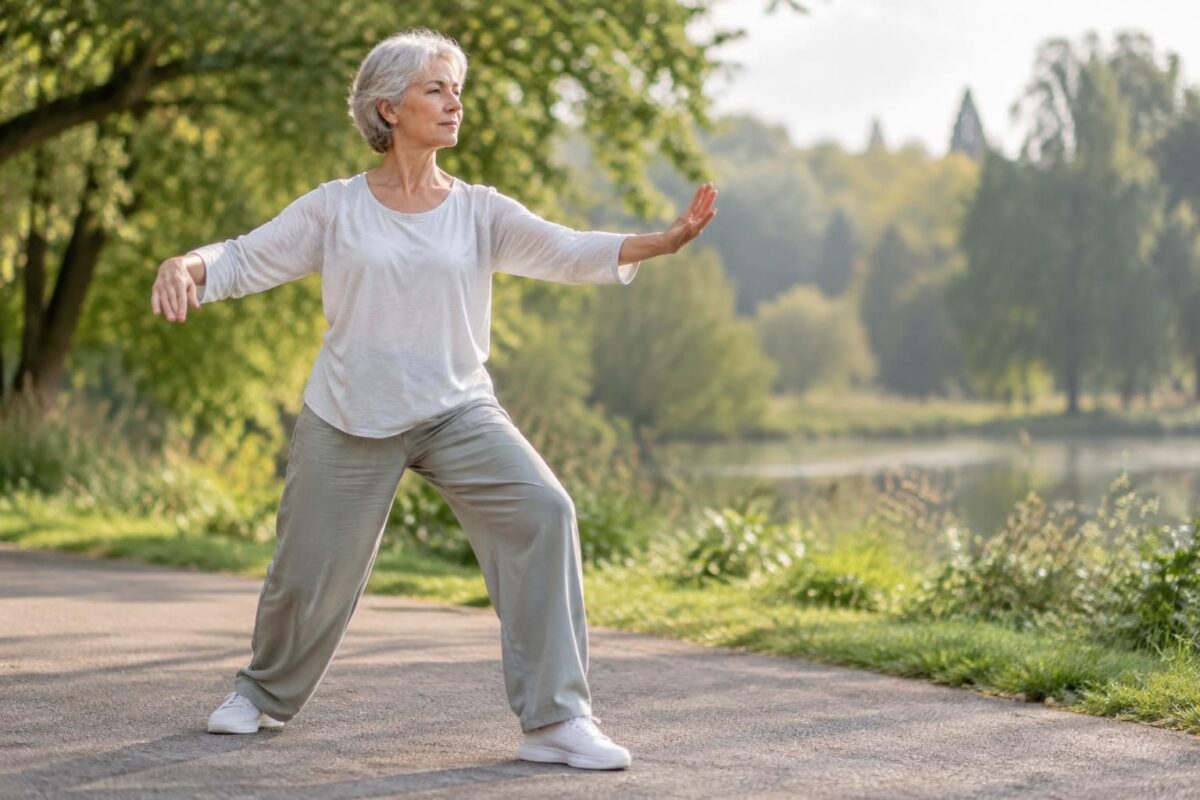
Fluid, low-impact activities limit repeated jolts. Swimming, cycling, leisurely walking, yoga, or tai chi can therefore help maintain movement, without guaranteeing that you will be free from discomfort or pain.
What the evidence says about physical activity and osteoarthritis
A Cochrane review published in 2024 brought together 139 trials involving 12,468 people with knee osteoarthritis. In the programs studied, exercise modestly improved pain and had a greater effect on physical function, although the findings do not identify one ideal activity for everyone.
Moderate pain during exercise, if it does not persist into the next day, does not necessarily mean that the joint is being damaged. However, pain that worsens or persists should be taken seriously and may warrant professional advice.
Which gentle sports should you choose for your needs?
The best activity is often the one you can do regularly and adapt easily. If your knees are sensitive, non-weight-bearing activities such as swimming or cycling may sometimes be better tolerated, but people’s responses vary.
| Activity | Why it may be suitable | What to watch for |
|---|---|---|
| Swimming or water aerobics | The water supports your body and lets you move with less weight-related strain. | Choose movements that feel comfortable and avoid those that trigger pain. |
| Cycling | Pedaling is smooth and low-impact, and the intensity can be adjusted. | Adjust the seat and start with moderate resistance. |
| Walking | It is accessible and can help maintain endurance and mobility. | Choose even ground and suitable shoes. |
| Yoga or tai chi | These practices work on balance, flexibility, and movement control. | Adapt the poses and do not push into a painful range of motion. |
If it is mainly your knee that bothers you, try a non-weight-bearing activity and pay attention to how you feel. If you have sharp pain or a warm or swollen joint, pause your return to activity and seek medical advice.
A simple return to activity in three steps
- Step 1: choose an accessible activity, then start with a short session at a comfortable pace.
- Step 2: repeat it regularly and gradually increase the duration or intensity, but not both at the same time.
- Step 3: check how you feel during the session and the next day. Reduce your effort if the pain persists or gets worse.
As a general guideline, the WHO recommends that adults aged 18 to 64 get at least 150 minutes of moderate physical activity per week and do muscle-strengthening activities at least two days a week. You can spread this amount across several sessions, depending on your fitness and the advice you have received.
Make progress without turning gentle activity into a chore
Even low-impact activity can cause discomfort if you do too much too soon, skip your warm-up, or repeat a movement that feels uncomfortable. Consistency often matters more than one intense session.
A little anecdote illustrates this principle: after a long break, a short walk on flat ground may feel more enjoyable than an ambitious outing. Increasing the distance in stages gives your body time to adapt.
“Consistency matters more than intensity.” Keep this idea in mind: moving at your own pace supports well-being and helps prevent pain, without trying to push beyond your limits.
When to ask for advice before getting started again
If you have osteoarthritis, a recent injury, or persistent pain, a doctor or physical therapist can help you choose an appropriate physical activity. Strengthening your thighs and hips, walking, cycling, or exercising in water may be among the options, depending on your situation.
For the general population, running does not automatically mean wear and tear. Observational data published in 2017 found different associations depending on activity level, but they do not establish that running causes osteoarthritis.
Frequently asked questions about gentle sports and joints
Should you stop exercising to protect your joints?
Generally, no. Appropriate activity helps maintain movement and strengthen the muscles that support the joints. Adjust your effort to your abilities and ask for advice if you have a medical condition or persistent pain.
Which sport should you choose if your knees are sensitive?
Cycling or swimming may sometimes be better tolerated because they limit impact. However, the choice depends on your situation and how you feel; a doctor or physical therapist can guide you.
Does pain during exercise mean that the joint is being damaged?
Not necessarily: moderate discomfort that does not persist into the next day does not always indicate damage. If the pain worsens, lasts, or comes with swelling or warmth, stop the activity and seek medical advice.
How much should you move each week?
The WHO recommends that adults aged 18 to 64 get at least 150 minutes of moderate activity per week, as well as muscle-strengthening activities at least two days a week. Adapt this guideline to your fitness and progress gradually.
Thank you for your interest. Warmly, Noémie. P.S. Leave a little comment at the bottom of this page and let me know what you think…