Mental well-being: fear of moving or a true signal from the body?
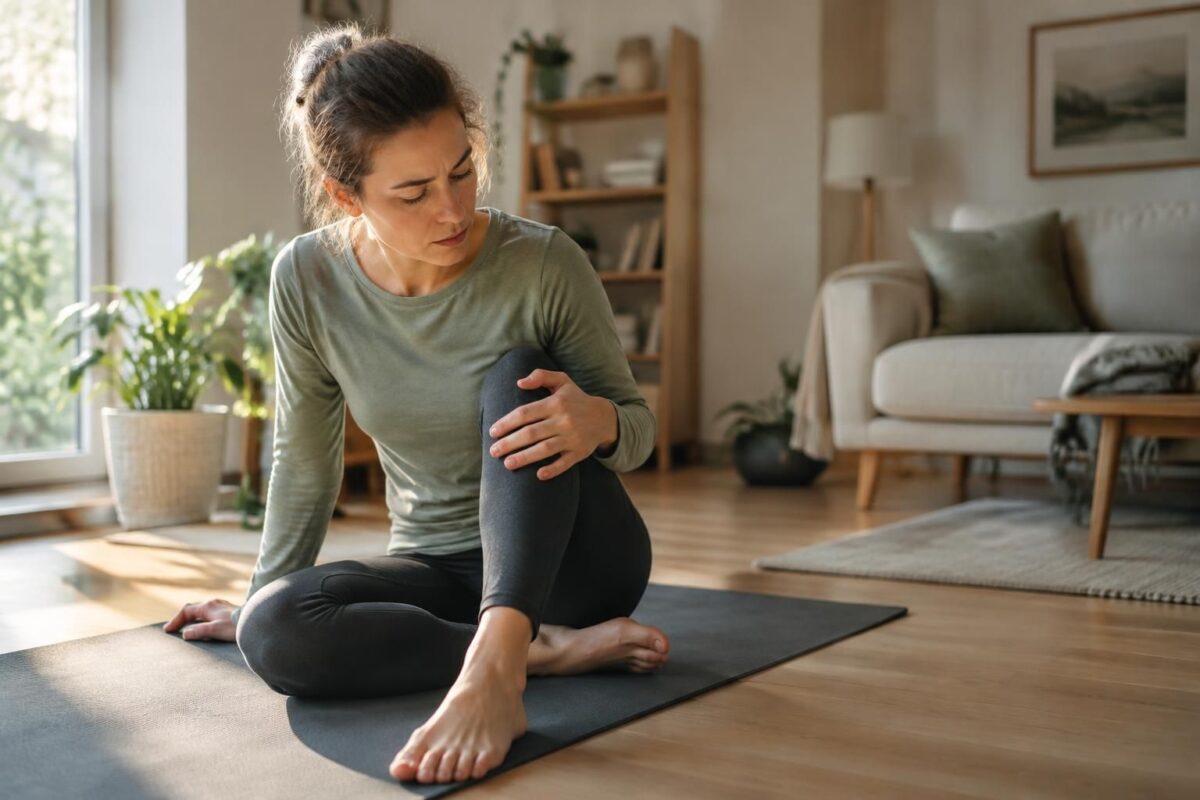
Hi, Noémie here. Fear alone does not prove that a movement is dangerous: ease back into it if no warning signs appear, and seek advice if the pain is new or concerning. Fear of movement can be a protective response, but avoiding every movement can sometimes reduce your strength and confidence in your body. Listening to yourself helps distinguish apprehension from a signal that deserves professional advice. The goal is not to force yourself, but to return to mindful movement at your own pace.
Do this first
Start with an easy movement and observe how your body responds during the activity and afterward. To better understand kinesiophobia, read this guide to fear of movement and pain and these tips for avoiding a movement that can sometimes worsen joint pain.
- Choose a simple movement, such as standing up or walking for a few minutes.
- Start at an intensity that feels manageable.
- Breathe slowly and relax your shoulders.
- Notice what changes during the movement and in the hours afterward.
- Stop and seek advice if the pain becomes sharp, unusual, or is accompanied by a new, concerning symptom.
Fear of movement or a signal from your body: how to tell the difference
After pain or an injury, the brain may associate certain movements with danger. This alarm response is natural, but it can become overwhelming if every sensation is interpreted as proof of damage.
Conversely, new, significant, or worsening pain deserves attention. Chest pain, unusual shortness of breath, sudden weakness, or loss of sensation are reasons to seek medical help promptly.
If it is mainly anticipation that is holding you back, try a smaller, slower movement. If a symptom is new or getting worse, pause the activity and seek advice.
The cycle of fear and avoidance
Fear activates the body’s alarm system: breathing and heart rate may speed up, and muscles may tense. When avoidance continues over time, lack of activity can also gradually reduce strength and endurance.
The pain is real, even if it does not always mean an injury is getting worse. As a useful idea puts it: “Caution helps; prolonged immobility is not always protective.”
A gradual return to rebuild confidence in your body
Your progress should be adapted to your situation, the cause of the pain, and the advice of your healthcare professional. Mild, temporary discomfort may sometimes occur, but pain that increases significantly or persists means the program needs adjusting.
| Stage | Simple action | What to notice |
|---|---|---|
| Getting started | Breathe slowly, then gently move a comfortable area. | The movement remains manageable and your breathing settles. |
| Resuming activity | Take a short walk or do a familiar physical activity at an easy pace. | You can talk without becoming very short of breath. |
| Progressing | Gradually increase the duration or range of motion, not everything at once. | You recover reasonably well after exertion. |
A common rehabilitation anecdote: someone hesitates to climb a step after a bad experience. They start again with a small movement near a support, then regain confidence as the movement becomes predictable.
Three steps to take today
- Step 1: name the movement you are hesitant to do and rate your apprehension from low to high.
- Step 2: choose an easier version of the movement and try it for a few minutes, without aiming for performance.
- Step 3: observe how you feel after exertion and repeat or adapt the movement according to your comfort.
If fear is limiting your daily activities, a physical therapist or mental health professional can support you. Cognitive behavioral therapy and graded exposure are among the approaches sometimes suggested, depending on your needs and clinical assessment.
Mindful movement and everyday mental well-being
A few regular movements can help you reconnect with your body: walk at a relaxed pace, move your shoulders between periods of sitting, or take a breathing break. Adapted physical activity often supports mental well-being; it does not have to be intense to be useful.
Slow breathing, relaxation, or meditation can also help ease anxiety before movement. They do not replace a medical examination, but they can make it easier to get moving again.
The right pace is one you can repeat without overexerting yourself. Take small steps and make room for rest: listening to yourself means neither stopping everything nor forcing yourself.
Does fear of movement mean my body is injured?
Not necessarily. Fear can persist after pain or an injury, but a new, intense, or worsening symptom deserves medical advice.
Can kinesiophobia contribute to ongoing pain?
Prolonged avoidance can reduce strength and endurance, and anxiety can amplify the perception of pain. This does not mean the pain is imaginary.
How long does it take to regain confidence?
It varies depending on the person, the cause of the pain, and how long it has been present. A tailored progression can take several weeks; a professional can help set realistic steps.
When should I stop exercising?
Stop and seek advice if the pain becomes sharp, gets significantly worse, or is accompanied by an unusual symptom. If you have an urgent warning sign, seek medical help promptly.
Thank you for your interest. Best wishes; Noémie. P.S.; leave a short comment at the bottom of this page and let me know what you think…