
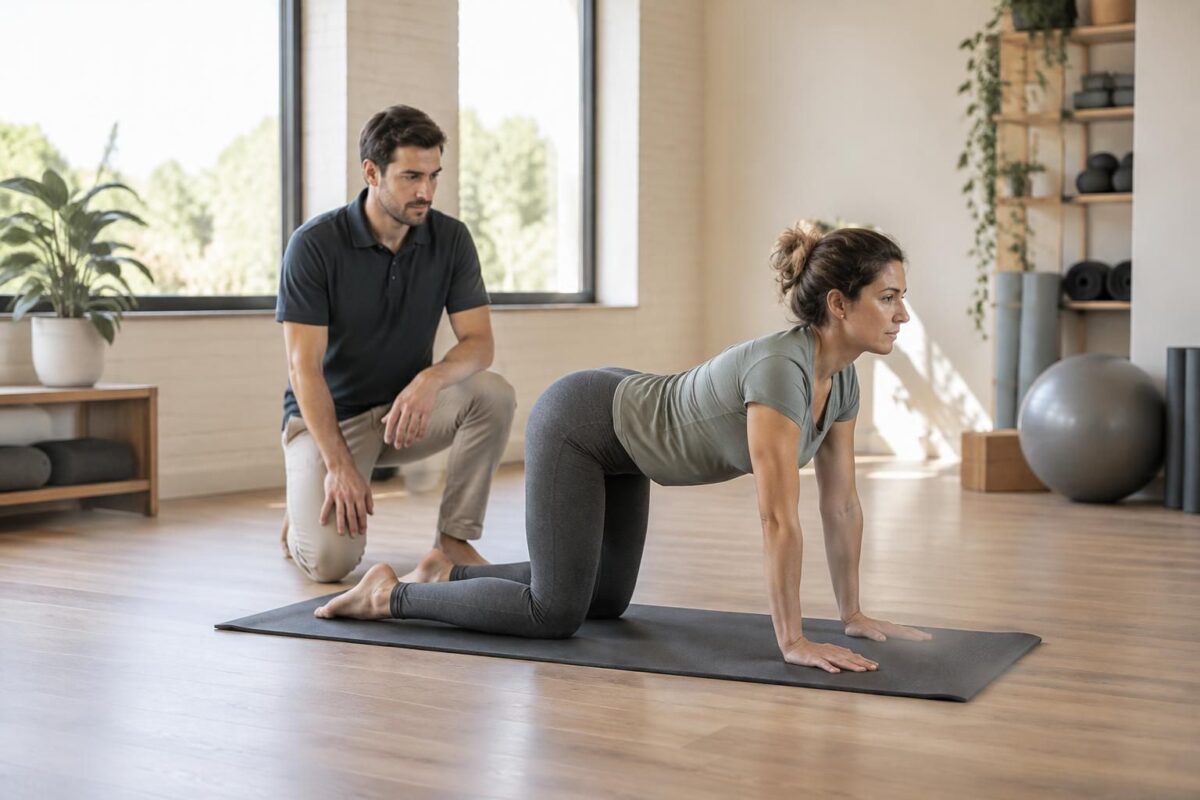
Body & Movement: Does This Gentle Exercise Really Protect Your Back?
Hello, it’s Noémie.
Yes, gentle movement can help protect your back, especially if it maintains mobility and gradually strengthens your muscles.
But no single movement can guarantee good back health on its own. The important thing is to move regularly, without overdoing it, and to pay attention to how you feel.
What you can do right now to take care of your back
- Start with 5 to 10 minutes of walking or gentle movements.
- Change positions regularly if you sit or stand for a long time.
- Breathe smoothly while stretching: don’t hold your breath.
- Reduce the range of motion if a movement triggers or increases pain.
- Gradually increase the duration and intensity, according to your comfort level.
To choose an activity that’s right for you, explore these gentle sports to help you get moving again without pain and these tips on gentle exercise and your joints.
Gentle movement and back protection: what changes depending on how you feel
If your back is simply stiff after a day spent sitting still, a leisurely walk or a few comfortable movements may help restore mobility. If a sharp pain appears or gets worse, don’t try to “push through it”; adapt the activity instead.
Gentle movement isn’t a magic formula. It can help prevent pain by maintaining flexibility, confidence in movement and, with suitable exercises, muscle strength.
| What you feel | A cautious option | What to watch for |
|---|---|---|
| Stiffness after sitting | Walk for a few minutes, then move gently | Pain that gets worse instead of easing |
| Mild discomfort while stretching | Reduce the range of motion and breathe normally | Sharp pain or an unusual sensation |
| Pain that persists or gets worse | Ask a healthcare professional for advice | Weakness, numbness or significant symptoms |
For example, after several hours at the computer, Sam could start with a short walk rather than a series of forceful stretches. If the discomfort persists, gets worse or is accompanied by unusual symptoms, it’s best to seek medical advice.
A comfortable posture is better than a fixed one
Sometimes we think we have to keep our backs perfectly straight all day. In reality, changing positions and moving regularly often matter more than maintaining a rigid posture.
Choose a position that lets you breathe and move easily. Physical well-being also comes from making these small, repeated adjustments—not from trying to maintain a perfect posture at all costs.
How to incorporate suitable physical activity without straining your back
Suitable physical activity can combine walking, mobility exercises and strengthening exercises. The right place to start depends on your condition, your habits and how your body responds to exertion.
- Choose a pace that lets you talk without getting out of breath.
- Try simple, comfortable movements before increasing the effort.
- Take a break or modify the activity if your symptoms change.
A video can give you ideas, but it doesn’t replace personalized guidance if you have persistent pain, an injury or a known medical condition.
Three steps to get moving again gradually
- Pay attention to how you feel. Notice which movements feel comfortable and which cause discomfort.
- Choose a simple movement. Start with a short walk or a mobility exercise that’s easy to control.
- Make progress slowly. Increase the duration or difficulty in small steps, without trying to do everything in one day.
This gradual approach makes the habit easier to maintain. The best movement is one you can do regularly and adapt without pushing yourself too hard.
Frequently asked questions about gentle movement and back health
Can gentle movement relieve a stiff back?
It may help restore mobility when stiffness is related to inactivity. Start gently and stop or adapt the movement if it increases your pain.
Which gentle movements should I choose for my back?
A leisurely walk and simple mobility exercises are often good places to start. The choice depends on how you feel and your level of fitness.
Should you avoid moving when you have back pain?
Not necessarily: adapted activity may be an option, but you shouldn’t push yourself. If the pain is severe, persists or is accompanied by unusual symptoms, seek medical advice.
How long should you move to protect your back?
You can start with a few minutes and gradually increase the time according to your comfort level. Regularity and adapting the activity matter more than sticking to the same duration for everyone.
Thanks for reading! I’d love to hear what you think in the comments. — Noémie