
Nutrition & Vitality: Is This Pre-Workout Meal Weighing You Down?
Hi there, it’s Noémie.
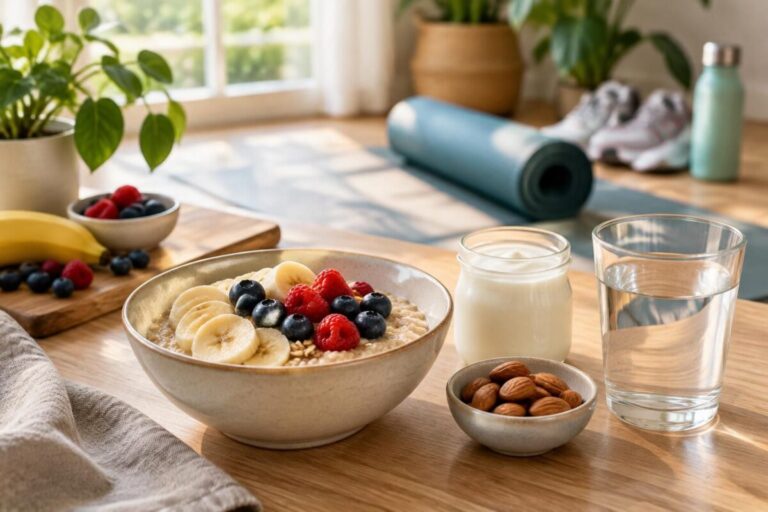
Yes, a meal that’s too large, fatty, or high in fiber just before exercising can make you feel heavy and affect digestion. Getting the timing and portion size right can help preserve your energy and digestive comfort. Your pre-workout meal doesn’t need to be complicated: the goal is to eat early enough and choose foods you tolerate well.
What to do right now
- If you have several hours, have a complete meal about 2 to 3 hours before your workout.
- If you’re eating less than an hour beforehand, opt for a small, easy-to-digest pre-workout snack.
- Limit very fatty, fried, or heavy meals before an intense workout.
- Avoid trying a new food on the day of an important workout.
- Drink regularly, without gulping down a large amount of water all at once just before you start moving.
To adjust your plate, also check out these ideas for foods to eat before exercising and these guidelines on what to drink before a workout.
Pre-workout meals: the pitfall that can weigh on digestion
A meal that’s high in fat or very large often slows digestion. During exercise, your body then has to manage both the digestive process and your muscles’ needs: some people experience bloating, nausea, or a heavy feeling in their stomach.
Foods that are very high in fiber, such as a large serving of legumes or raw vegetables, can also be uncomfortable just before a workout, especially if you have a sensitive stomach. That doesn’t mean you need to avoid them: their place in your diet depends mainly on meal timing and your tolerance.
Adjust the timing to your workout
As a general rule, allow 2 to 3 hours between a complete meal and exercise. If you’re short on time, a small portion about 30 to 90 minutes beforehand may be enough, depending on your appetite and the type of activity.
For example, Léa goes running after work. A heavy dinner at 6 p.m. before a 6:30 p.m. workout may sit heavily in her stomach; a banana or yogurt, if she tolerates them well, will often be lighter. Sports nutrition should be tailored to the individual, not a rigid rule.
| Time before your workout | Option to consider | What to keep in mind |
|---|---|---|
| 2 to 3 hours | A balanced meal with a starchy food, protein, and cooked vegetables | A reasonable portion, not too fatty |
| 30 to 90 minutes | A small pre-workout snack, such as a piece of fruit or a simple slice of toast | Choose foods you tolerate well |
| Less than 30 minutes | A few sips of water; eat only if you feel you need to | Avoid forcing yourself to have a large snack |
These guidelines are only approximate: the duration and intensity of your workout, as well as your digestive comfort, also matter. An easy workout doesn’t call for the same things as a long or strenuous training session.
Boost your energy without compromising digestive comfort
The right meal supports your energy without making you feel overly full. A serving of rice or bread with a source of protein and cooked vegetables may work well several hours before exercise. As your workout approaches, keep your choice simple and reduce the portion size.
A common mistake is to eat more “for energy” and then start exercising too soon. But athletic performance also depends on sleep, hydration, and training: a heavier meal doesn’t guarantee a better workout.
To keep things simple, pay attention to how you feel after each workout. If a certain food often seems to cause discomfort, try another option or have it at a different time, rather than unnecessarily cutting out entire food groups.
Three steps to find the right meal for you
- Write down the time and contents of your meal, then note when your workout starts.
- Pay attention to how you feel during exercise: hunger, energy, bloating, or comfort.
- Adjust just one thing at a time, such as the portion, the food, or the timing, so you can identify what works for you.
This simple tracking turns how you feel into useful guidelines: after a few tries, it becomes easier to plan your pre-workout meal.
Frequently asked questions about pre-workout meals
How long should I wait after a meal before exercising?
After a full meal, generally allow 2 to 3 hours. After a small snack, 30 to 90 minutes may be enough, depending on your comfort and the intensity of the workout.
What should I eat before a workout if I’m short on time?
Choose a small portion of a simple food you tolerate well, such as a piece of fruit or a slice of toast. Avoid forcing yourself to eat a lot just before you start.
Should you avoid fiber before exercising?
Not necessarily. Fiber can be beneficial in your everyday diet, but a large amount just before exercise can sometimes interfere with digestion. Focus mainly on adjusting the portion and timing to suit your tolerance.
Why do I feel heavy after eating before exercising?
A meal that’s too large or fatty, or eaten too close to your workout, can contribute to this feeling. Try a lighter portion or allow more time before training.
I hope you found these tips helpful. See you soon! — Noémie