Natural health: gentle exercise for the joints or just a trend?
Hi, it’s Noémie. Gentle exercise is more than a trend: when it’s well suited to you and done regularly, it can help preserve joint mobility and strengthen the muscles around the joints. Walking, cycling, swimming or yoga: the right choice depends on your pain, your abilities and what makes you want to keep going. The goal isn’t performance, but gradual, enjoyable and sustainable physical activity.
Do this first
Choose an activity that’s easy to adapt, then start at your own pace. To compare walking, cycling and swimming, see this guide to gentle exercise for getting back into it without pain and these tips on gentle exercise and the joints.
- Start with 10 to 20 minutes, depending on your fitness and how you feel.
- Aim for moderate effort: you should be able to talk while exercising.
- Try walking, cycling, swimming or gentle exercise.
- Gradually increase the duration, without trying to go faster each time.
- If the pain gets worse or persists, stop exercising and ask a healthcare professional for advice.
Gentle exercise and the joints: why movement matters
Avoiding all movement for fear of damaging a joint isn’t always the best option. Cartilage is nourished by the exchanges that occur through movement, while the muscles surrounding it help stabilize the joint.
Regular, targeted and adapted activity can therefore support joint mobility and help limit stiffness. It won’t repair damaged cartilage, but measured exertion can help prevent pain and maintain independence.
“The best movement is one you can repeat without hurting yourself.” This simple rule helps distinguish moderate exercise from overly intense effort.
Walking, swimming, cycling or yoga: which should you choose?
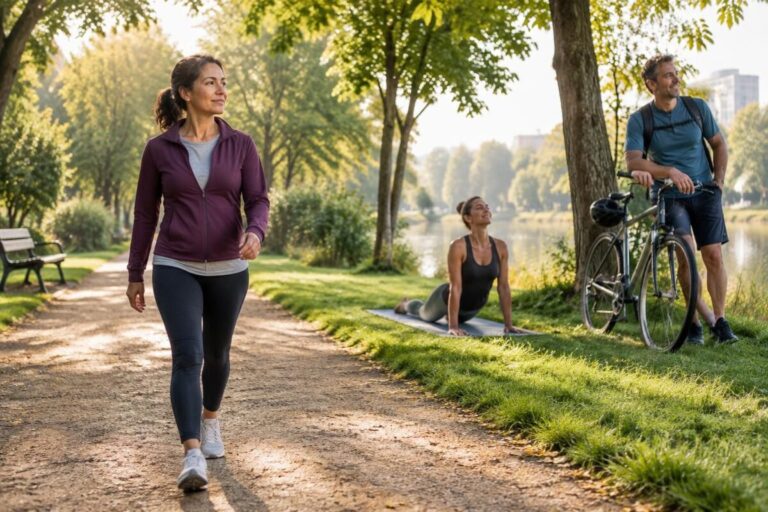
Each activity works the body differently. Brisk walking builds endurance, swimming engages many muscles with little impact on the ground, and cycling lets you work your legs while easily controlling your effort.
| Activity | Main benefit | What to watch for |
|---|---|---|
| Walking | Accessible and easy to fit into your daily routine | Reduce the duration if the pain gets worse |
| Swimming | Works the whole body with little impact | Choose a stroke that feels comfortable for your shoulders and knees |
| Cycling | Makes it easy to adjust the intensity | Adjust the seat and start with light resistance |
| Gentle yoga or Pilates | Works on posture, flexibility and control | Avoid positions that trigger sharp pain |
If your knees are sensitive, cycling or exercising in water may feel more comfortable than running. If you’re mainly stiff after a sedentary period, start with short walks or a few gentle movements, then pay attention to how you feel.
Three steps to getting back to exercise without pressure
- Step 1: choose an activity you enjoy and set a realistic schedule, such as two or three short sessions a week.
- Step 2: start gently, with an easy warm-up and an intensity that lets you talk without getting out of breath.
- Step 3: note how you feel during exercise and the next day. If all goes well, gradually increase the duration or frequency, but not both at the same time.
Here’s an anecdote that illustrates this well: after putting jogging aside because of knee pain, Marie tried swimming and yoga twice a week. Above all, she rediscovered the pleasure of moving and found a routine she could stick with.
Gentle exercise: fitness trend or lasting approach to health?
Gentle exercise has grown in popularity as a fitness trend, but its value doesn’t depend on fashion. Regularity, adapting the activity to your abilities and enjoying the practice are what make it easier to stick with over time.
Walking, cycling, swimming and gentle exercises can also contribute to overall well-being, sleep and stress management. For many adults, aiming eventually for around 150 minutes of moderate activity a week is a common guideline, to be adapted to your circumstances, health and the advice of a professional.
Frequently asked questions about gentle exercise and the joints
What gentle exercise should I choose if my knees hurt?
Cycling or swimming are often good options to try because they limit impact. Start gently and ask a professional for advice if the pain persists or gets worse.
How long should I exercise at first?
You can start with 10 to 20 minutes, depending on your fitness and how you feel, then gradually increase the duration. Regularity matters more than one very long session.
Should I stop as soon as a joint feels sore?
Mild discomfort doesn’t always mean you need to stop all activity. Reduce the intensity or adapt the movement; if you have sharp, persistent or unusual pain, stop exercising and seek medical advice.
Can gentle exercise replace treatment for osteoarthritis?
No. Physical activity can be part of an overall care plan, but it doesn’t replace a diagnosis or a treatment plan agreed on with a healthcare professional.
Thank you for your interest. With friendship; Noémie. PS; leave a short comment at the bottom of this page and let me know what you think…